ServicesIron and sediment filtration
Iron and Sediment Filtration in Cockrell Hill
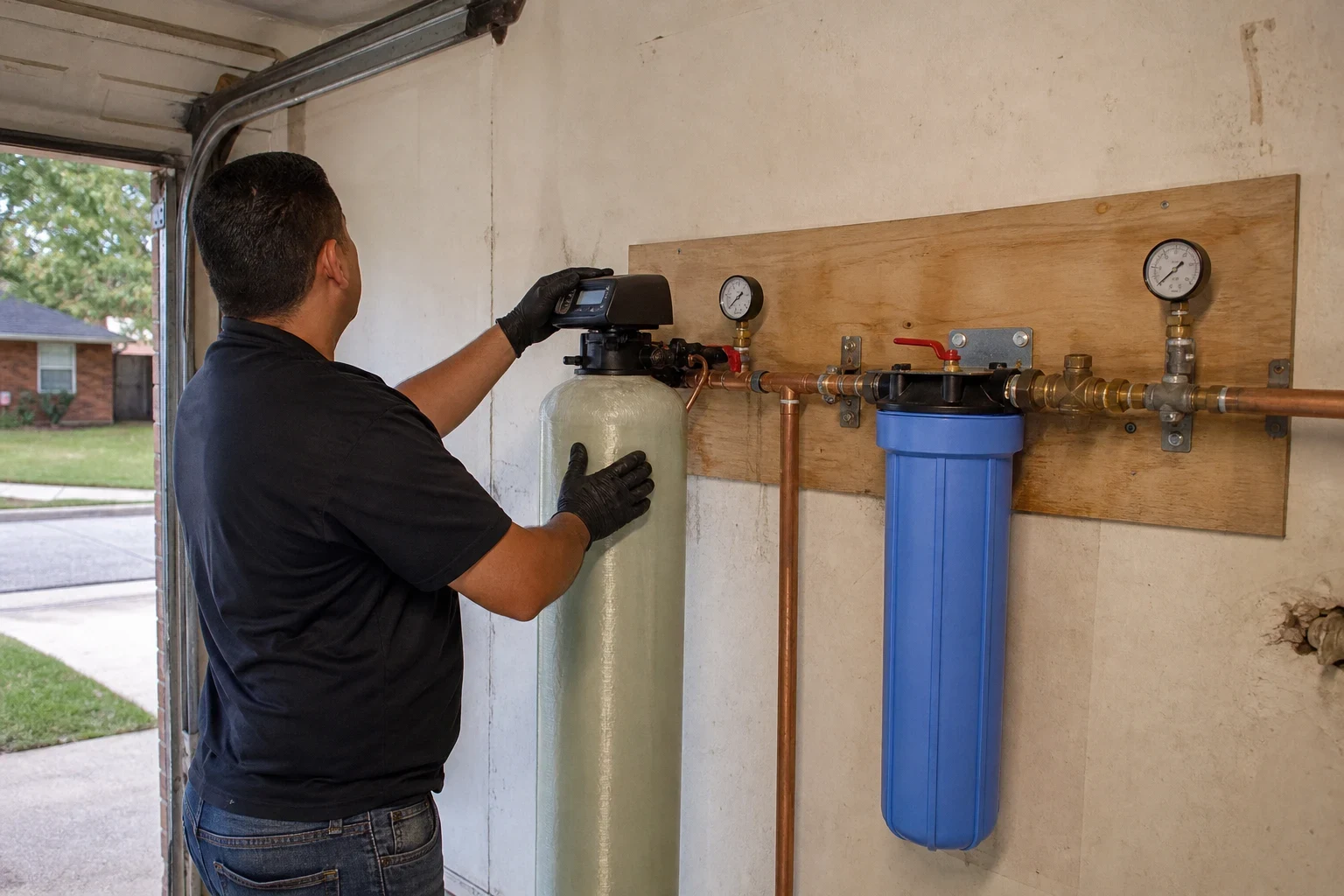
Orange rings in the toilet, grit in the faucet screens, a tub that looks dirty no matter how you scrub. We test your water, share photos of what turns up, and fit a filter that stops iron and sediment before they reach your fixtures and appliances.
Is an iron or sediment filter right for you?
Sediment means the solid stuff carried in your water: fine sand, silt, rust flakes and chips of scale shaken loose from pipes or the street main. Iron behaves differently. Sometimes it shows up already orange. Other times it is dissolved and invisible until the water rests in a tank or toilet bowl, then it turns rusty. You often get both at once, and each one calls for its own type of filter.
Before we suggest anything, we test. Iron in your home can come from the supply, or it can come from old galvanized or cast iron pipe inside the walls. A filter where water enters the house cannot fix rust that forms in pipe after it, and if that is your situation, we will say so plainly instead of selling you equipment that will not help.
When a filter is the right answer, it also protects the rest of your system. Grit wears out valves in your water heater, washer and dishwasher, and it clogs the carbon filters and reverse osmosis membranes downstream much faster than it should.
What the job includes
- 01
Iron, manganese and pH testing
We check iron and manganese levels, pH and how cloudy the water is. Those numbers decide whether you need a simple cartridge or an oxidizing filter.
- 02
Sediment pre-filter
A spin-down screen or cartridge housing catches sand and rust flakes. In many homes we stage a coarse filter ahead of a finer one so the cartridges last longer.
- 03
Iron removal filter, when the test calls for it
For dissolved iron, an oxidizing media tank turns it into particles and traps them, then backwashes itself on a schedule. That tank needs a drain nearby and usually an outlet.
- 04
Bypass valve and gauges
We fit a bypass on each system, so the faucets keep running while a cartridge is out. A pressure gauge sits on each side of the filter, and when the readings drift apart, you know it is time for a fresh one.
- 05
Before and after photos
You get pictures of your fixtures and test samples when we arrive, the install as it goes in and the finished system, so you know exactly what was done and why.
Questions about Iron and sediment filtration?
Call(214) 366-3693When rust and grit start showing up at your taps
Rust rings that keep coming back
Reddish-brown marks in toilet bowls, sinks or below the tub spout usually mean iron. When they reappear a few days after you scrub, the water itself is leaving them.
Clogged aerators and showerheads
Sand or dark flakes in faucet screens mean sediment is moving through the lines. Washer and ice maker inlet screens catch it too.
Water that changes color after sitting
Clear from the tap but yellow in a glass an hour later is the classic sign of dissolved iron.
Dingy laundry
Whites that slowly turn tan or come out with faint orange spots are often reacting to iron in the wash water.
A metal flavor in drinks
Iron changes how water tastes well before it stains anything. If your morning coffee seems flat or a glass from the tap reminds you of a penny, that is worth testing.
Cloudy water after main work
Nearby line repairs or hydrant flushing around the Dallas area can stir up sediment. If cloudiness keeps returning, a pre-filter is worth a look.
How a visit goes
- 1
A phone conversation first
Tell us about the stains, grit or color and which rooms they show up in. We will want to know roughly how old your plumbing is and where the main line comes into the house, and then we pick a time to visit.
- 2
Testing at your home
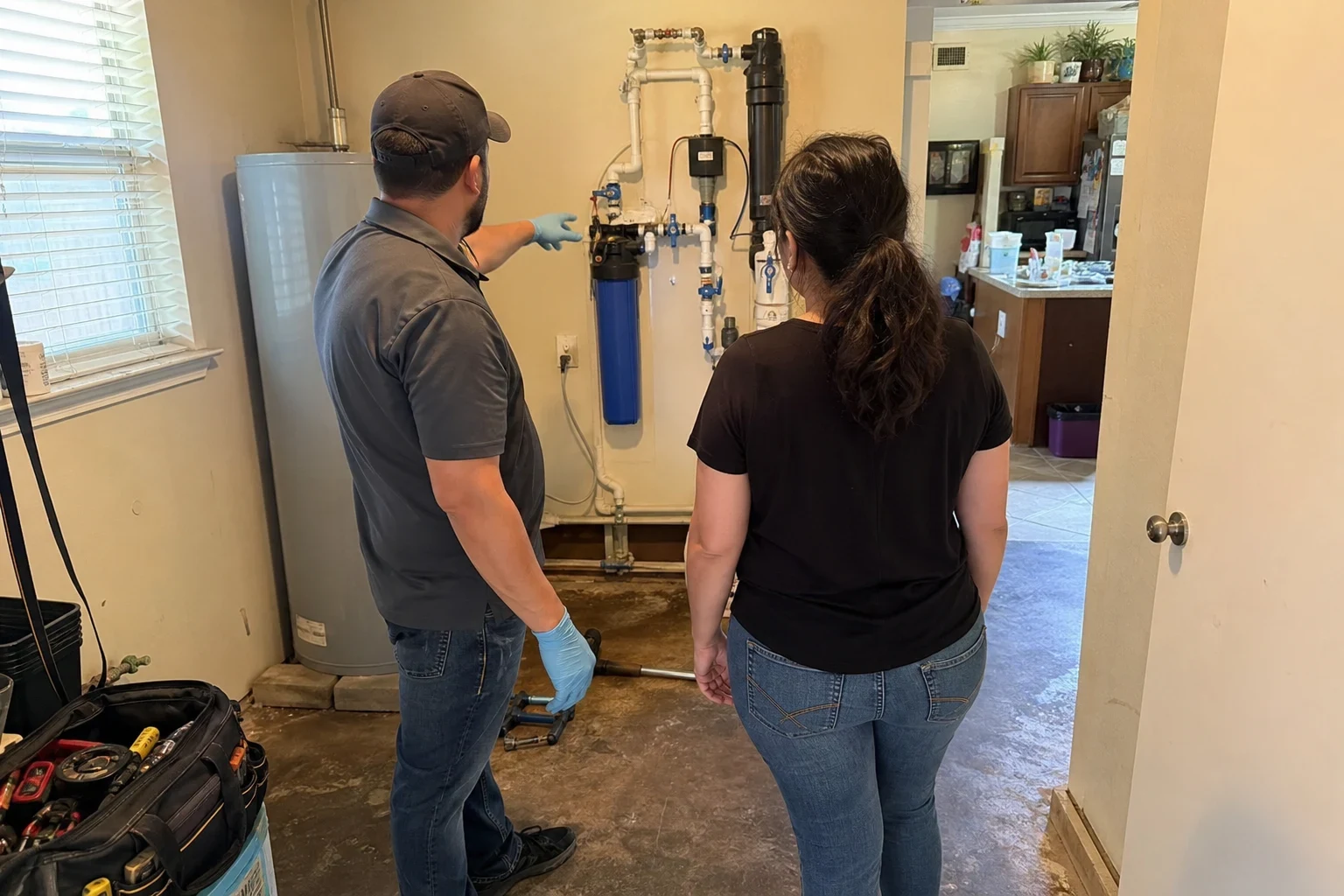
We draw samples from the first tap and from the line where water enters, take pictures of stains and screens, and run our tests. You see the results with us on the spot.
- 3
An honest recommendation
We explain whether the problem is iron, sediment, your own pipes or a mix, and give you a written, line-item estimate. If a filter will not solve it, we tell you that too.
- 4
Installation and cleanup
We shut off the water, install the filter at the main line with a bypass, flush the system and check for leaks. Drop cloths go down where we work, and we take our scraps with us.
- 5
Walkthrough
We show you the gauges, how to swap a cartridge and what the before-and-after record shows, so you know what normal looks like going forward.
How we figure your cost
Iron and sediment setups vary a lot, and two houses side by side can end up with very different equipment. After testing, we write your estimate out line by line, so you can see what each part covers before any work begins.
- What the test finds
- Sediment alone often needs only a cartridge or spin-down filter. Dissolved iron or manganese calls for an oxidizing media tank, which costs more to buy and install.
- Your home's water use
- More bathrooms and people mean higher flow. The filter has to be sized so pressure stays steady when the shower and washer run at once.
- Where the line enters
- Many homes on slab foundations have the main coming in outside or in a garage. Tight access, exterior mounting or a cover for the equipment can add time and materials.
- Drain and power
- Backwashing iron filters need a drain and often an outlet close by. If neither is there, running them adds to the job.
- Ongoing upkeep
- Cartridges get swapped every so often, and the media inside an iron tank has a working life too. Your estimate lists those running costs alongside the install, so the full picture is on paper from day one.
Questions about iron and sediment filters
Will a filter remove the rust stains I already have?
No. It stops new iron from reaching your fixtures, but existing stains need a rust remover and some scrubbing. Once the filter is in, those stains should stay gone after you clean them.
I'm on city water. Can it really have iron in it?
It can, though often the iron comes from older pipes in the house rather than the supply. That is why we test at the point of entry and at a tap. Comparing the two tells us where the iron is picking up.
Will this lower my water pressure?
A properly sized filter should cause only a small drop you are unlikely to notice. Pressure falls when a cartridge gets loaded with grit, which is exactly what the gauges are there to show you.
How often do the cartridges need changing?
That comes down to how dirty the incoming water is and how much your household runs through the system. A home with light sediment may stretch a cartridge for many months, while a gritty supply fills one faster. Watch the gauges and they will tell you. We can take care of swaps through our filter replacement and maintenance service, or teach you to do it yourself.
Do I also need a softener or carbon filter?
Not automatically. Iron and sediment filtration solves stains and grit. Chlorine taste is handled by whole-house carbon filtration, and a softener only makes sense if a hardness test supports it.

See what is in your water before you buy anything
We will test, show you what turned up and walk you through your options in plain terms. If a filter is the answer, you will know what it does and what it costs before we start.