ServicesWater softeners
Water Softeners in Cockrell Hill, Installed After a Hardness Test
A softener is a real investment, so we start with a hardness test at your tap. If the reading supports one, we size the unit to your home and photograph the install. If it doesn't, we tell you that plainly and point you to a better fit.
Test First, Then Decide
Hard water carries dissolved calcium and magnesium. At higher levels those minerals leave white crust on faucets, cloudy film on glasses and scale inside your water heater. A softener swaps those minerals out through an ion exchange resin, and the result is gentler on fixtures and appliances.
Not every home needs one. Hardness changes from one water supply to the next, and a softener added to water that is already fairly soft costs you salt, water and money without much payback. That's why we only recommend a softener after we've measured the hardness in your home and shown you the result.
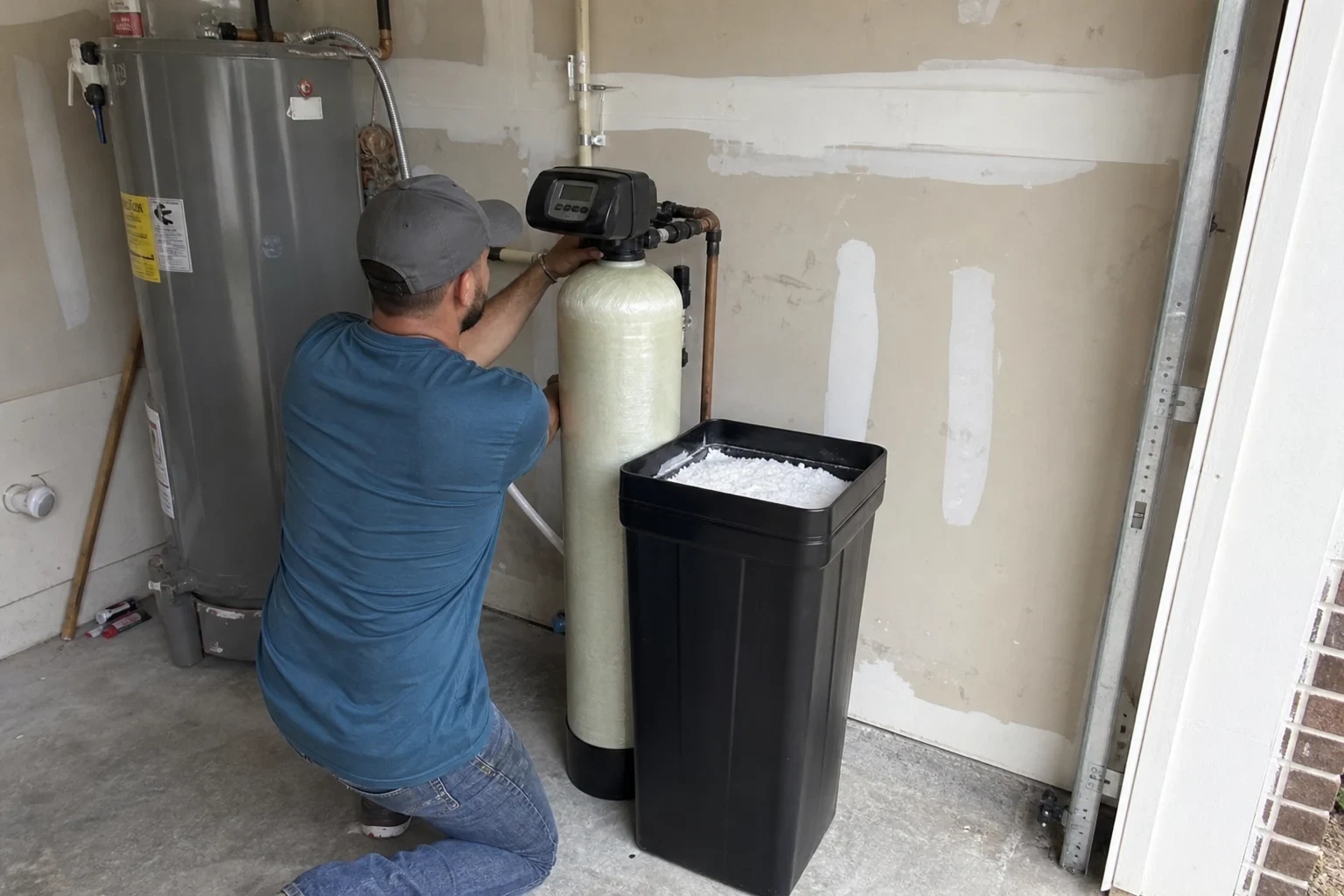
Every step is photographed, from the test reading to the finished bypass valve, so you can see what we found and what we did.
What Our Softener Service Includes
- A hardness reading in your home
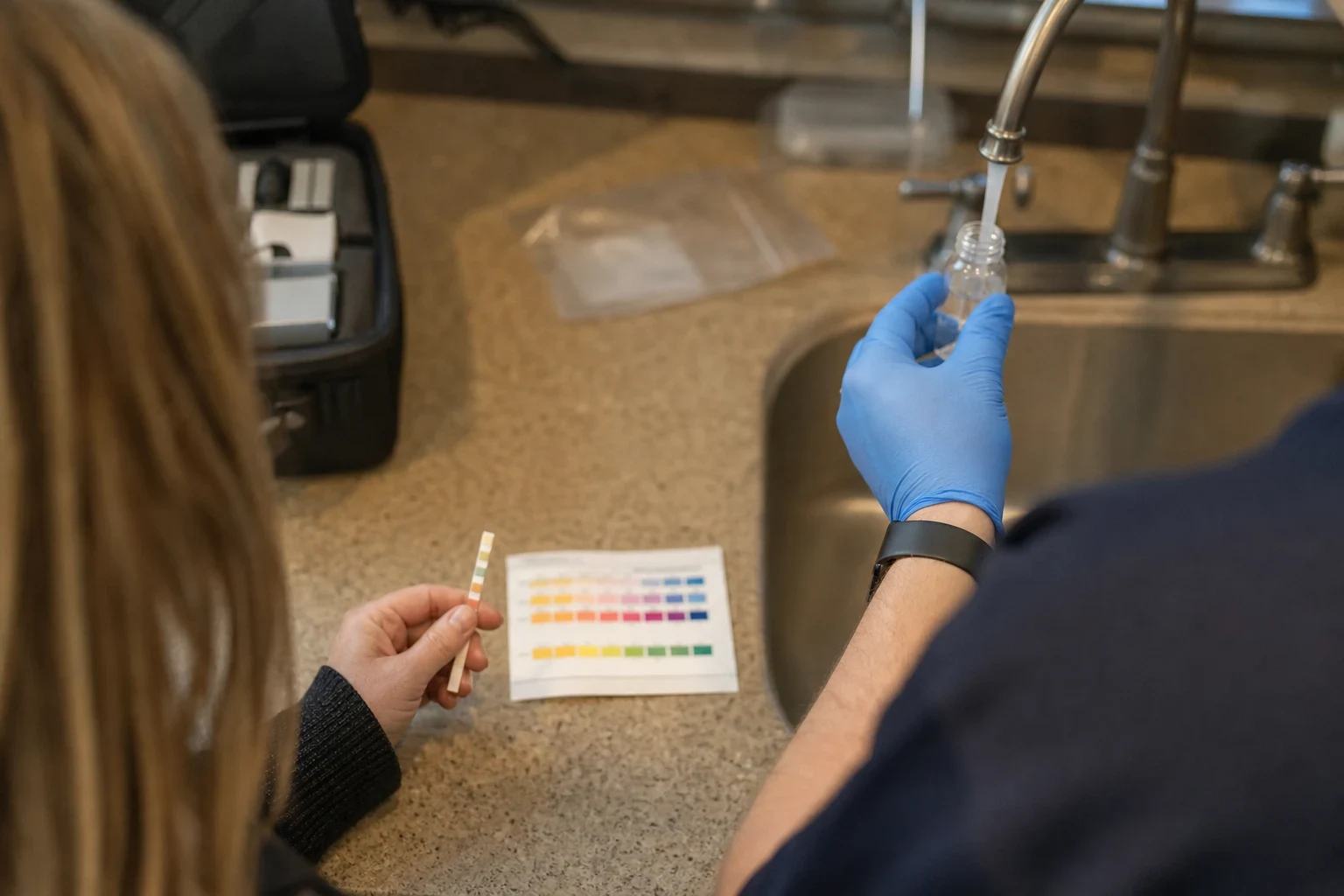
- We draw water from a kitchen or bathroom faucet and read hardness in grains per gallon. We also look at iron, since it changes how a softener behaves. The numbers go on paper so you can keep them.
- An honest yes or no
- When the reading comes back low, we say so. The thing that bothered you may be better handled by whole-house carbon filtration or iron and sediment filtration.
- Sizing to your household
- Resin capacity is matched to your hardness number, how many people live in your home and your daily water use. Too small and the unit cycles constantly. Too large and it burns salt it doesn't need.
- Clean installation
- We set the tank near the point where your main line enters and add a bypass valve. If the softener ever has to be serviced, you turn that valve and still have water at every tap. The drain line runs to an approved discharge point. Drop cloths protect the floor, and we sweep up before we go.
- Programming and a walkthrough
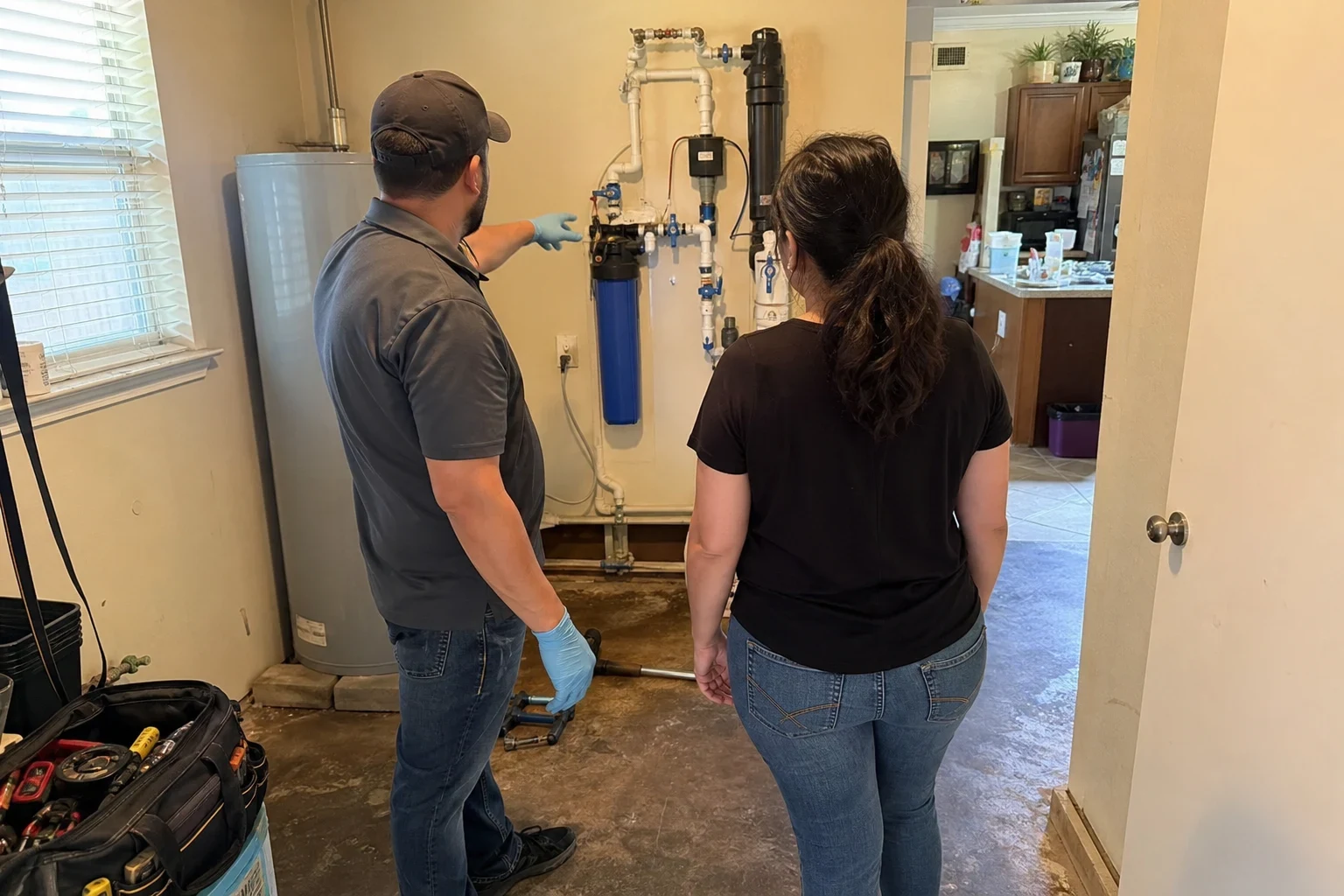
- We dial in the regeneration schedule for your water, show you where the salt goes and how the bypass works, and leave you a record of the finished setup.
When a Hardness Check Makes Sense
Chalky rings around faucets
If a white, gritty ring forms around the faucet base or showerhead a week or two after you scrub it, minerals are a likely cause.
Hazy glasses after the dishwasher
Glassware that comes out spotted or cloudy after a full cycle is often the first thing people notice.
Thin, filmy soap
Minerals react with soap, so it takes more shampoo to work up suds, and a dull film stays behind on skin and the tub.
A rumbling water heater
Popping or crackling from the tank can mean mineral scale has settled beneath the water. The heater then has to push its heat through that crust, which wastes energy and wears the unit faster.
Scratchy towels
Laundry that dries stiff even with fabric softener can point to mineral content in the wash water.
How the Work Goes
- 1
Start with a call
Tell us what you've been seeing, and we'll find a time to come test. Expect a couple of questions about your plumbing and the age of your water heater.
- 2
Reading the water
We take a sample, measure hardness and iron, and photograph the readings. You see the numbers before we suggest anything.
- 3
Your recommendation in writing
When the numbers support a softener, we write up an itemized estimate that breaks out equipment, parts and labor. When they don't, we walk you through the reasoning and what could help instead.
- 4
Installation day
We close the main valve, plumb the softener in with a bypass, connect the drain and check every joint for leaks. Each connection is photographed as it's made.
- 5
Startup and handoff
The brine tank gets filled, the unit runs its first regeneration, and we test the water again so you can compare before and after side by side.
What Moves the Price
Softener pricing depends mostly on your water and your plumbing. The hardness test sets the size, and the install location sets the labor. Your estimate lists each item so nothing shows up later as a surprise.
- Hardness and iron levels
- Harder water, or water with iron in it, needs more resin capacity or a pre-filter, and that adds to the equipment cost.
- Household size and water use
- A bigger household uses more water, so it needs a larger tank that can run longer between regenerations.
- Install location
- A main line that's easy to reach, say in a garage or utility closet, takes less time than one that has to be rerouted. How far the spot sits from a drain and an electrical outlet matters too.
- What's already there
- Hauling out an old softener, or setting up a carbon filter alongside the new one, brings extra parts and time.
Water Softener Questions
Something not covered here? (214) 366-3693
Why won't you just install a softener without testing?
Because it might not help. If your water is already fairly soft, a softener adds salt and water costs with little benefit. A test takes the guesswork out, and you keep the photo of the reading either way.
Will softened water taste salty?
Most people don't notice a taste at normal hardness levels. If you'd rather avoid the small amount of added sodium in drinking water, under-sink reverse osmosis at the kitchen tap removes it.
Does a softener remove chlorine or other contaminants?
No. Softeners target hardness minerals and small amounts of iron. Chlorine taste and smell call for whole-house carbon filtration, and plenty of homes run both, with the carbon unit placed ahead of the softener.
How much upkeep does a softener need?
Plan on topping off the salt in the brine tank from time to time; how often depends on your water use. During our filter replacement and maintenance visits we can inspect the resin, clean out the brine tank and fine-tune the settings.
What if my test shows high iron instead?
Iron can foul a softener's resin over time. In that case we may suggest iron and sediment filtration ahead of the softener, or on its own, and we'll show you why.
Will I lose water during the install?
Only for part of the visit, while the main valve is closed and the softener is tied in. We'll let you know before we shut it off and turn it back on as soon as the connections are leak-checked.
See Whether Your Home Needs a Softener
We test your water, show you the number and tell you honestly what it means. If a softener is worth it, you get a written estimate before we begin any work.