ServicesWater testing
Water Testing in Cockrell Hill
A good filter choice starts with knowing what your water actually contains. We sample at the taps your family uses, show you each reading as we take it, and explain the results in everyday language. Sometimes the honest answer is that your home needs very little.
Test the water, then choose
A water test measures what reaches your faucets, rather than what a sales sheet says could be in it. City water is treated to meet drinking water rules, yet it can pick up metals and rust inside your own pipes, and taste and smell differ from one house to the next.
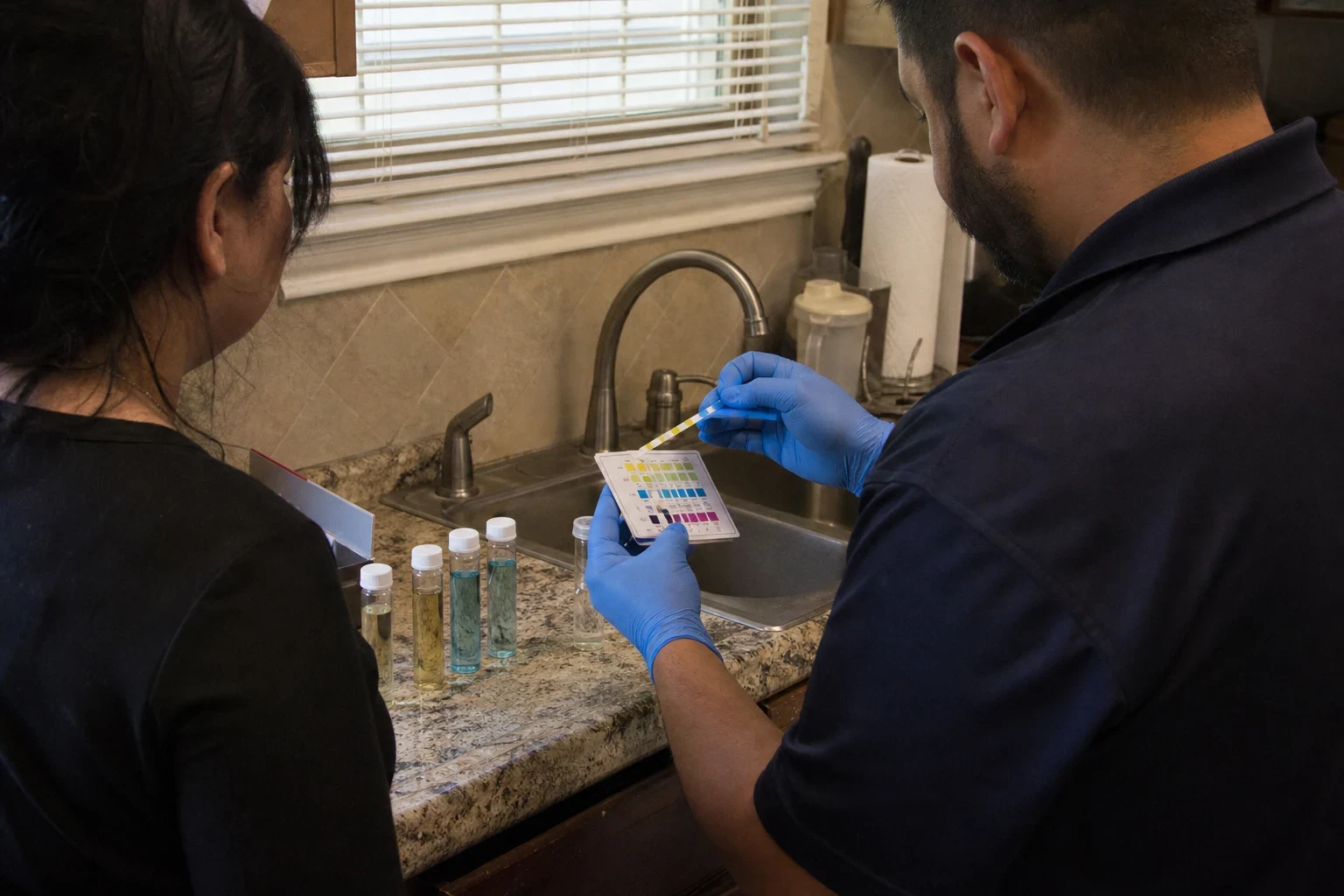
We pull samples from the taps you drink and cook from, take quick readings on site, and send samples to an independent lab when a question needs a lab answer. Your report includes a photo of every sample point and reading, so you can see exactly where each number came from.
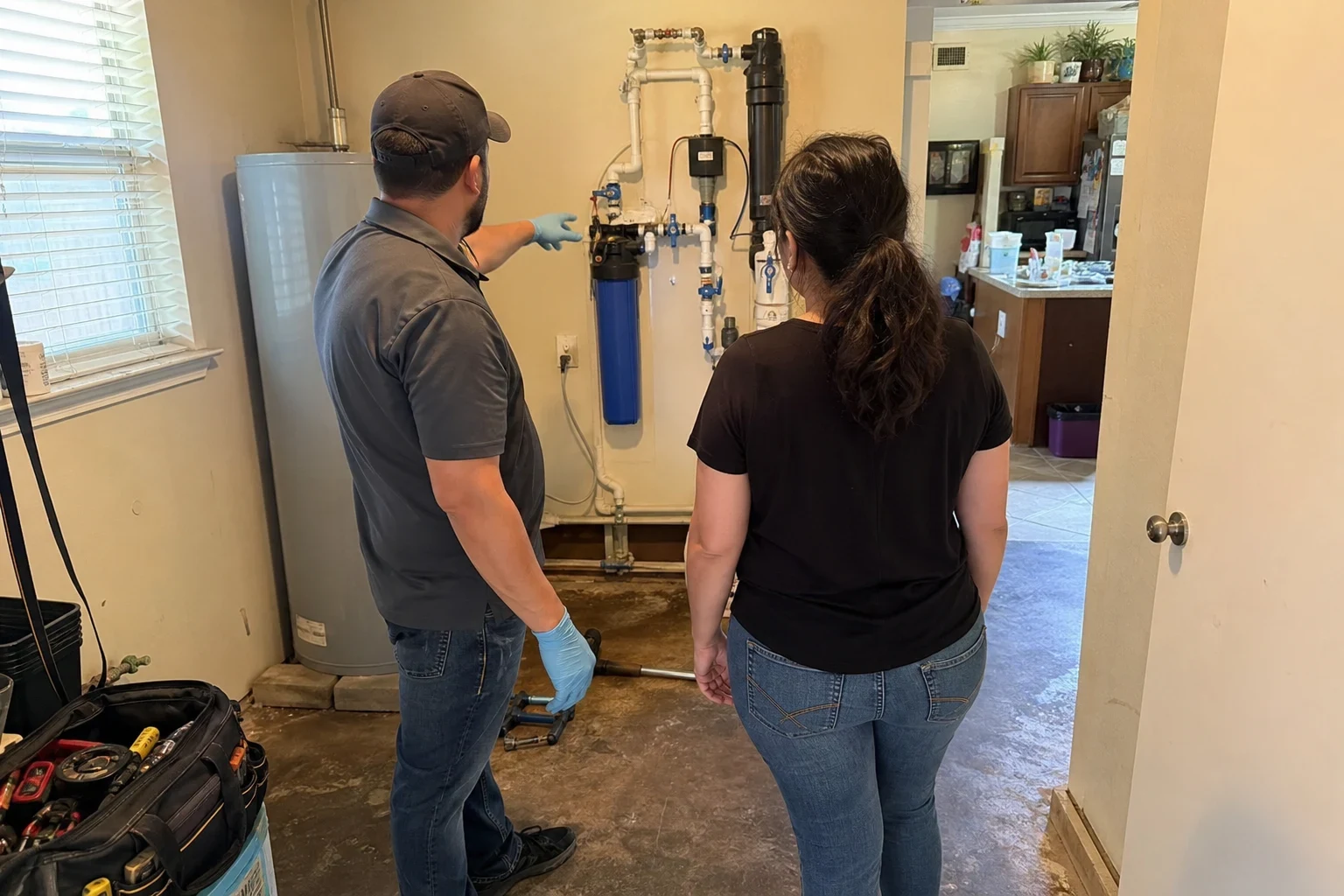
Then we tell you what fits. That might be an under-sink reverse osmosis system for drinking water, whole-house carbon filtration for chlorine taste, or nothing at all. We would rather you buy the right thing once than the wrong thing twice.
What your water test covers
- Samples from the right taps
- We usually sample the kitchen faucet and one other fixture, plus the point where water enters your home if we can reach it. Comparing them shows whether an issue starts in the supply or in your plumbing.
- On-site readings
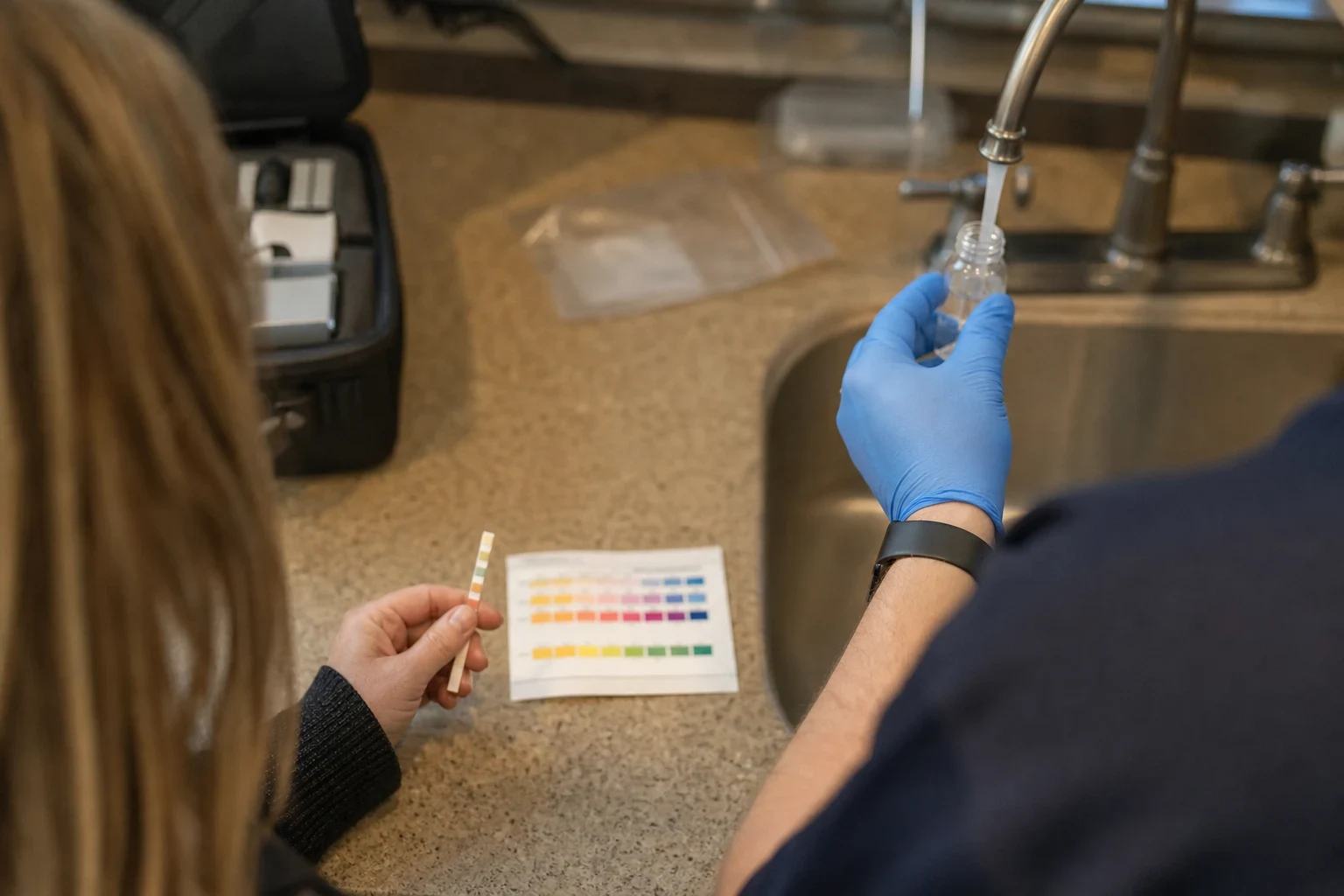
- We check chlorine, hardness, pH, iron and total dissolved solids while we are there. You watch the strips change color and see the meter numbers yourself, and each one goes into your report.
- Lab analysis for trace concerns
- Lead, which usually comes from old solder or fixtures, cannot be measured reliably with a strip. When your concerns or the age of your plumbing point that way, we explain which lab panel fits and why before any sample leaves your home.
- A photo report you can keep
- Every sample point, reading and result is pictured and labeled. You can share it with family, a landlord or a plumber, and compare it with a future test.
- A straight recommendation
- We go over what is fine, what is worth fixing and what is only cosmetic. If a softener is not supported by your hardness numbers, we will say so.
When your water is worth testing
Tap water that smells like a pool
Treated water often carries a noticeable chlorine odor. A test measures the level and shows whether a carbon filter would make a difference.
Orange stains or a metal taste
Rusty rings in the sink or a metallic flavor may mean iron or pipes that are corroding. Testing tells the two apart so you address the real cause.
Aging pipes
Homes still on original galvanized pipe or older soldered copper raise fair questions about lead and rust. A lab test settles them.
Crusty faucets and spotted glasses
Scale buildup leads many people to assume they need a softener. Checking hardness first saves you from buying equipment you might not need.
A baby on the way or a change in health
Plenty of families just want to know what's in the water they use for formula or cooking. That's a good enough reason on its own.
Grit or cloudiness
Sediment in faucet screens or hazy glasses is worth checking, particularly after nearby plumbing work or a repair to the main.
How a test visit goes
- 1
Start with a phone conversation
Let us know what you have been seeing, smelling or tasting, and roughly when your home was built. From there we suggest a level of testing that matches, so you skip panels you do not need.
- 2
Sampling in your home
We run the taps, collect samples in clean bottles and take a picture of each location. Most visits are short and we leave the sink area as we found it.
- 3
On-site results
We share the quick readings right away and show you the pictures. If lab work is needed, samples go out the same visit with clear labels.
- 4
Your report and options
Once results are in, we walk through them with you by phone or in person. You get the written report with pictures and our honest take on what, if anything, to do next.
What moves the price of a water test
The biggest driver is how much you want answered. A quick on-site check and a full lab panel are very different jobs. On the phone we lay out the options in plain terms, so you know what the visit includes before we arrive.
- On-site versus lab testing
- Readings taken with meters and strips at your sink cost less than analysis by an independent lab. The lab is worth it for lead and other trace questions.
- Number of sample points
- Testing one tap is simpler than comparing several fixtures and the main supply line.
- Which contaminants you ask about
- Each added lab panel adds cost. We help you pick the ones tied to your actual concerns.
- Follow-up testing
- A retest after installing a filter confirms it is doing its job. Some homeowners want that, others do not.
Questions about water testing
Something not covered here? (214) 366-3693
If city water meets the standards, why bother testing?
Water generally leaves the treatment plant in good condition. What it picks up in your home's own pipes is another matter, and so are taste and smell, which the rules don't cover. A test measures your water, not an average.
Is testing just a way to sell me something?
No. During a test visit our job is to measure your water correctly and explain the results clearly. If a filter would help, we show you the exact numbers in your report that back it up. If nothing is off, we tell you so directly, and you're never pushed to decide that day.
Will I need a softener?
A hardness test is the only way to know. Plenty of local homes have water too soft to warrant one. If your results point the other way, we can discuss water softeners at that point.
How long do lab results take?
You'll have the on-site readings before we leave. Lab results take longer, depending on the panel and the lab's workload. We give you a realistic timeframe the day we send the samples and call you when the results come in.
Do you check for lead?
We do. Lead typically comes from old pipe, solder or fixtures, not the supply. We take the sample following the lab's instructions, and if lead turns up, under-sink reverse osmosis is often a practical answer for drinking water.
Find out what is in your water
One visit, clear pictures of every reading and an honest answer about whether you need anything at all. We test homes in Cockrell Hill, Dallas and nearby towns.