ServicesWhole-house carbon filtration
Whole-House Carbon Filtration in Cockrell Hill
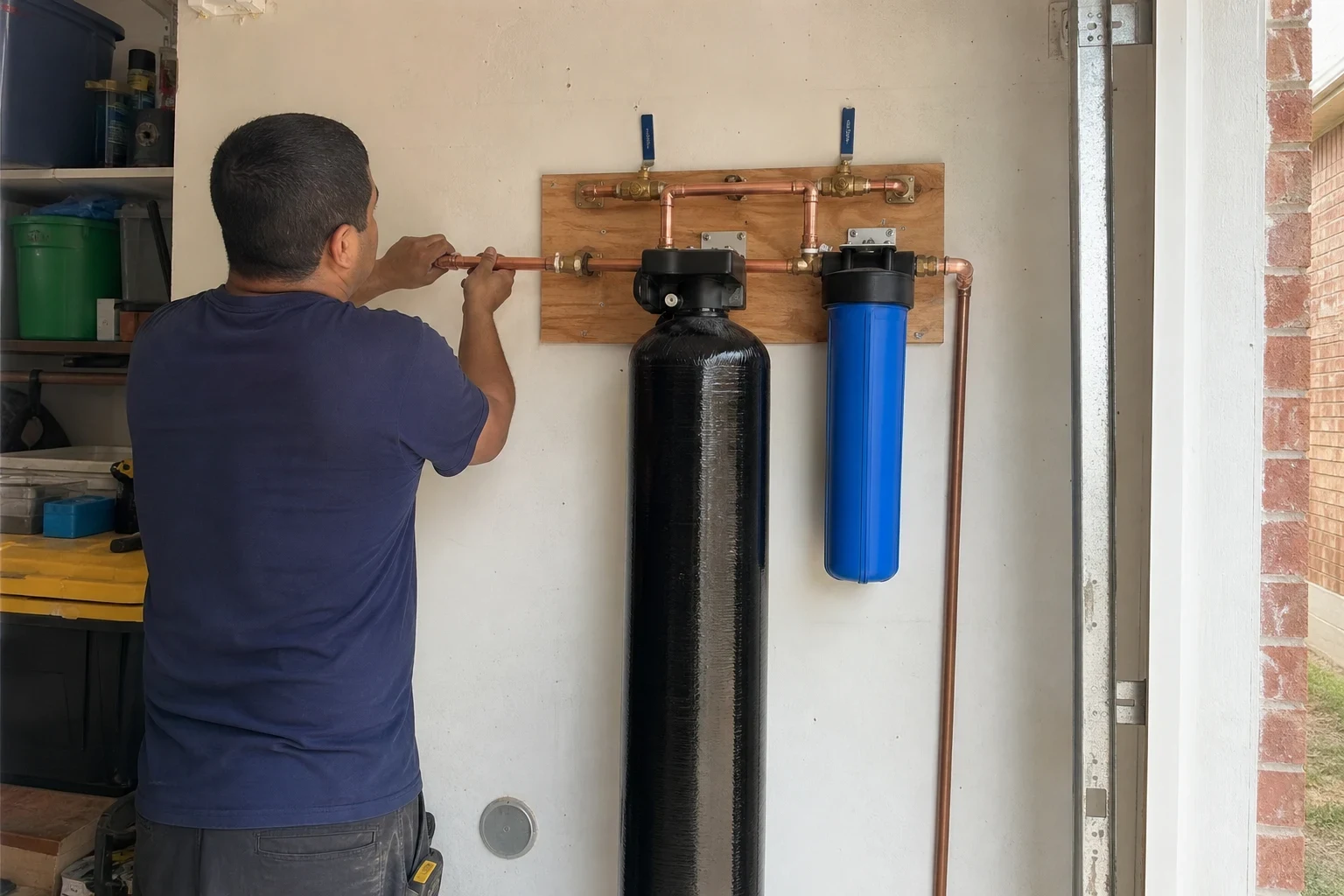
We install a carbon filter where water enters your home, so the shower, kitchen sink and laundry all run without that chlorine taste and smell. You see where it will go before we start, photos as the work happens and the finished install before we leave.
What a whole-house carbon system does for your home
City water is disinfected so it arrives safe to use. That disinfectant does its job, but it also leaves the taste and pool-like smell many people notice in a glass of water or a hot shower. A whole-house carbon filter sits on the main line and removes most of it before the water reaches any faucet.
Choose it when what bothers you is the taste, the smell, or skin and hair that feel dry after a shower, and you want the fix at every faucet rather than just one. If your main concern is drinking water, lead from older fixtures or extra assurance on trace contaminants, under-sink reverse osmosis is often the better fit. Plenty of homes end up with both.
We are also plain about the limits. Carbon does not soften water, and it is not the answer for orange staining or grit. If we see signs of those, we will tell you and suggest water testing before you spend money on equipment.
What comes with the install
- 01
We inspect your main line before anything else
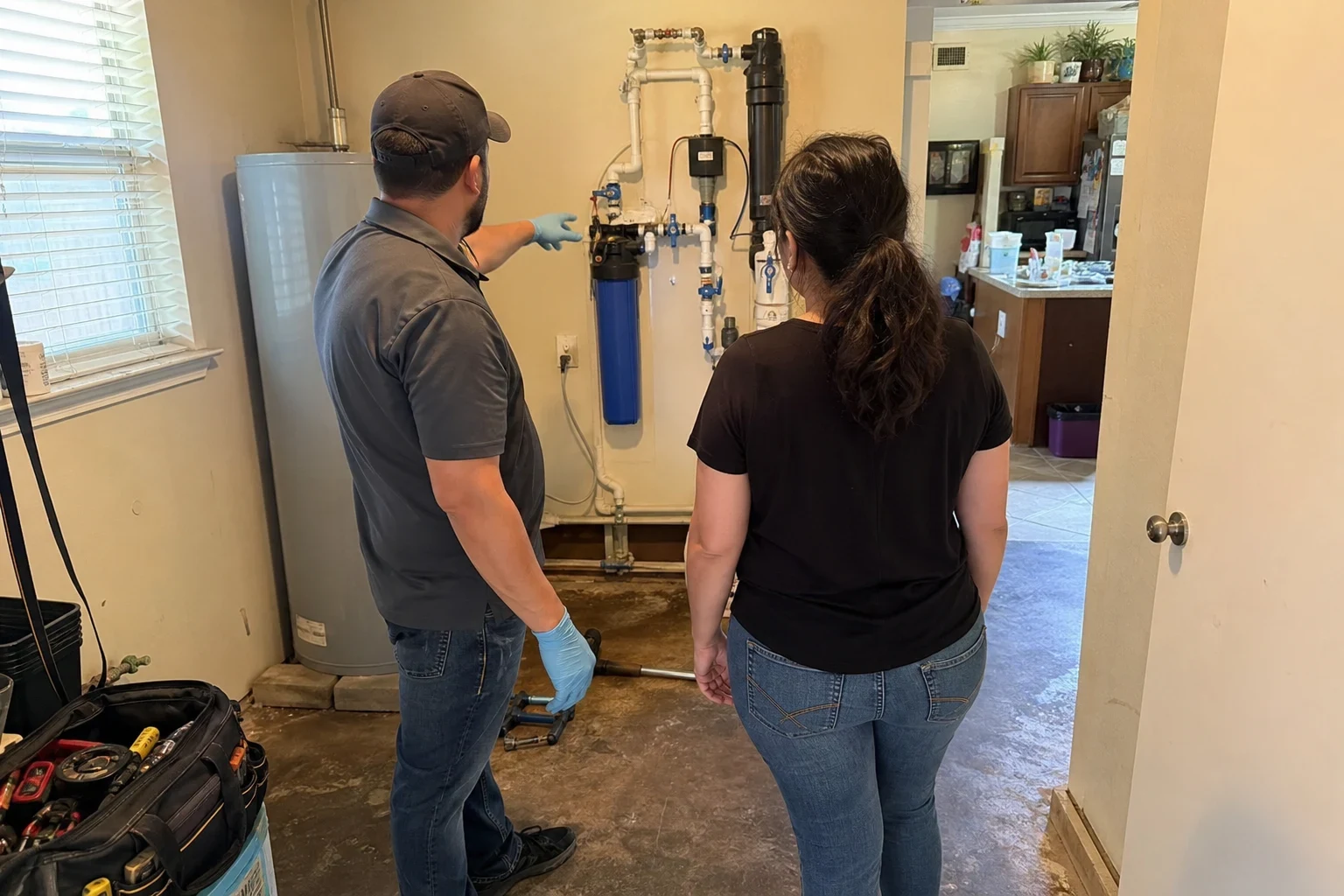
We locate where the supply enters the house, note the pipe size and material, and take pictures of the shutoff and any existing equipment. Those photos go with your estimate, so you can see exactly what we plan to change.
- 02
Carbon matched to your water and flow
An undersized tank wears out early and can lose pressure when two showers are on together. We size the system around your bathrooms and your household's water habits. Some utilities use chloramine rather than chlorine, which regular carbon handles poorly, so for that water we use catalytic carbon designed for it.
- 03
A prefilter for sediment
A compact prefilter stops sand and bits of old scale before they get to the carbon. The carbon lasts longer as a result, and future service is easier.
- 04
Bypass valve and secure fittings
With the bypass, the house keeps its water while the system is being serviced. Before we wrap up, we take close-up photos of each joint so you have a record of the work.
- 05
Shelter for systems installed outside
In many local homes the main line comes in on an exterior wall. If the system must go outside, we plan shade against the Texas sun and insulation for the odd hard freeze.
Questions about Whole-house carbon filtration?
Call(214) 366-3693Signs a whole-house filter makes sense
Your water smells like a pool
The odor is strongest from a hot shower or when you first fill a glass. That is the disinfectant, and carbon is built to remove it.
Showers leave skin and hair dry
Many people notice softer-feeling skin and less frizz once the chlorine is gone from the shower water.
Coffee and tea taste off
If you have switched to bottled water just for cooking and brewing, filtering at the main line can bring you back to the tap.
A pitcher filter is not keeping up
Pitchers and faucet filters help at one spot. They do nothing for the bathroom sink, the ice maker or the bathtub.
You filter one sink and not the rest
An under-sink unit is great for drinking water. A whole-house system covers everything else that comes out of a tap in your home.
How the work goes, step by step
- 1
A conversation by phone
Tell us what you notice and how long it has been going on. We will ask how many bathrooms you have and where the water line comes in, then pick a visit time that works for you.
- 2
Visit, photos and a written estimate
We inspect the main line, take photos and give you a line-item estimate. If anything points beyond chlorine, such as staining or scale, we recommend a test first instead of selling you the wrong equipment.
- 3
Install day
We tell you ahead of time how long the water will be off. Floors and walkways get covered, the old section of pipe comes out, and we document the system as it goes in.
- 4
Flush, check and hand-off
We rinse the new carbon, run the system under pressure to check for leaks and capture the finished install. Then we show you the bypass and when the next service is due, which we can handle through filter replacement and maintenance.
What sets the price
We price each home after we see the main line, and we put every part and labor item in writing. There are no dollar figures here because the right system for a small two-bath house and a larger home with heavy use are not the same. These are the things that move the number.
- How many people and bathrooms
- Each extra shower or person adds to the water flowing at the busiest moment of the day. A bigger tank keeps pressure steady when that happens.
- Type of carbon
- Catalytic carbon costs more than standard carbon. We only recommend it when your water's disinfectant calls for it.
- Where the main line enters
- An open garage wall is a quick job. A tight crawl space, an outdoor location that needs an enclosure, or extra pipe to reach a good spot adds time and materials.
- Condition of the existing plumbing
- A corroded shutoff valve or aging pipe at the connection point sometimes needs replacing. If we find it, you will see what we found and the line item before we do anything.
Questions about whole-house carbon filtration
Will a whole-house filter lower my water pressure?
When the system is sized correctly, most people do not notice a change. Pressure problems usually come from a tank that is too small or a clogged prefilter. We size for your peak use and show you how to check the prefilter.
How often does the carbon need changing?
That comes down to how large the system is and how many gallons pass through it. Smaller cartridge setups get swapped more often, while a large tank of carbon can go much longer between changes. You get the expected schedule for your setup in writing when the install is done.
Is my city water unsafe?
Public water is treated to meet drinking water standards, and we are not going to tell you otherwise. A carbon filter is about taste, smell and comfort. If you have a specific worry, such as old plumbing, water testing will give you real answers.
Does carbon remove hardness or iron?
No. Carbon targets chlorine and many taste and odor compounds. Hardness is handled by a softener, which we only suggest after a hardness test, and staining or grit points to iron and sediment filtration.
Do I still need a drinking water filter?
Not always. Many families are happy with how the water tastes once the chlorine is gone. If you want extra protection for drinking and cooking, an under-sink reverse osmosis unit at the kitchen sink pairs well with a whole-house system.
See your main line before you decide
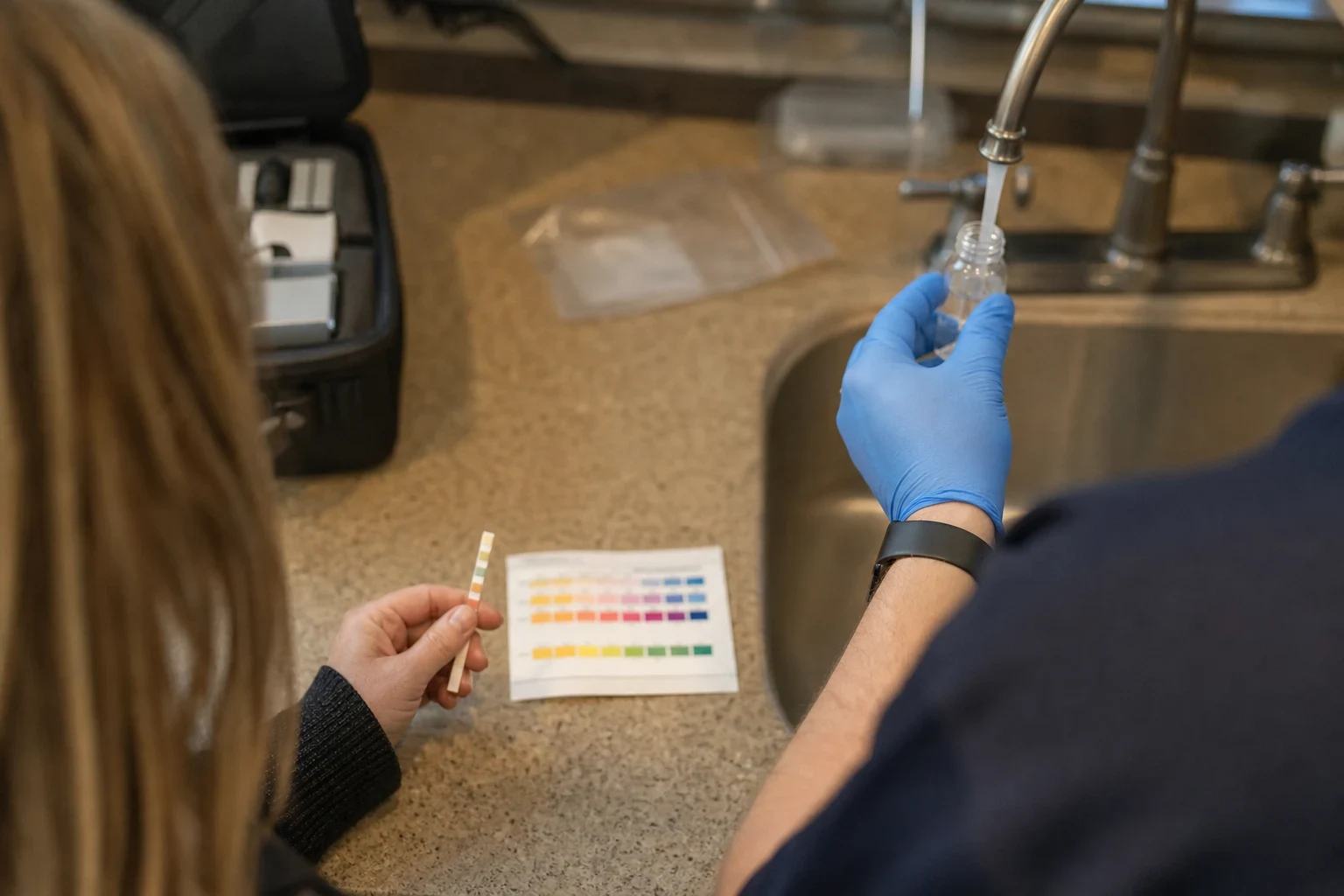
We will look at where water enters your home, photograph what we find and explain what a carbon system would change. You get a written estimate and time to think it over.