ServicesUnder-sink reverse osmosis
Under-Sink Reverse Osmosis in Cockrell Hill
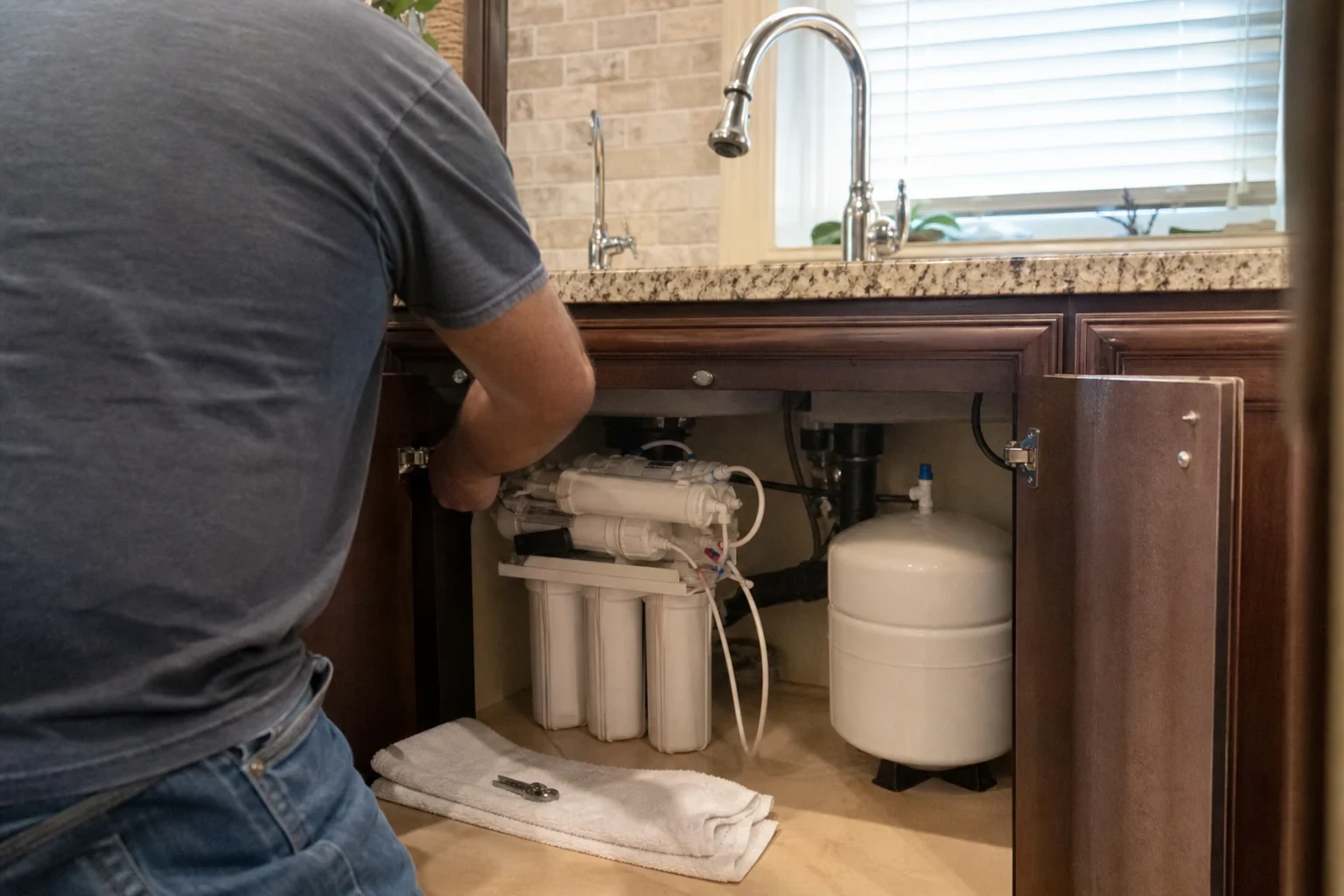
Reverse osmosis gives you a dedicated tap of very clean water for drinking, coffee and cooking. We fit the system under your kitchen sink, test the water before and after, and send you photos of every valve and fitting so you know exactly what is in your cabinet.
What an under-sink RO system does for you
A reverse osmosis system pushes your tap water through a series of filters and a very fine membrane. The membrane holds back dissolved minerals, lead and many trace contaminants, and the clean water collects in a small storage tank until you open the faucet. It does not treat the whole house. It treats the water you actually drink.
It is the right call when you want better-tasting water, when your home has older plumbing and you worry about lead at the tap, or when you would simply like an extra layer of assurance beyond what the city delivers. If your concern is chlorine smell in the shower or scale on every fixture, a different system may fit better, and we will say so. Whole-house carbon filtration or a softener after a hardness test can handle those jobs.
Many people come to us after a water test shows what is in their water. If you have not tested yet, we can start there so the system matches a real result instead of a guess.
What comes with your RO install
- A starting reading at your faucet
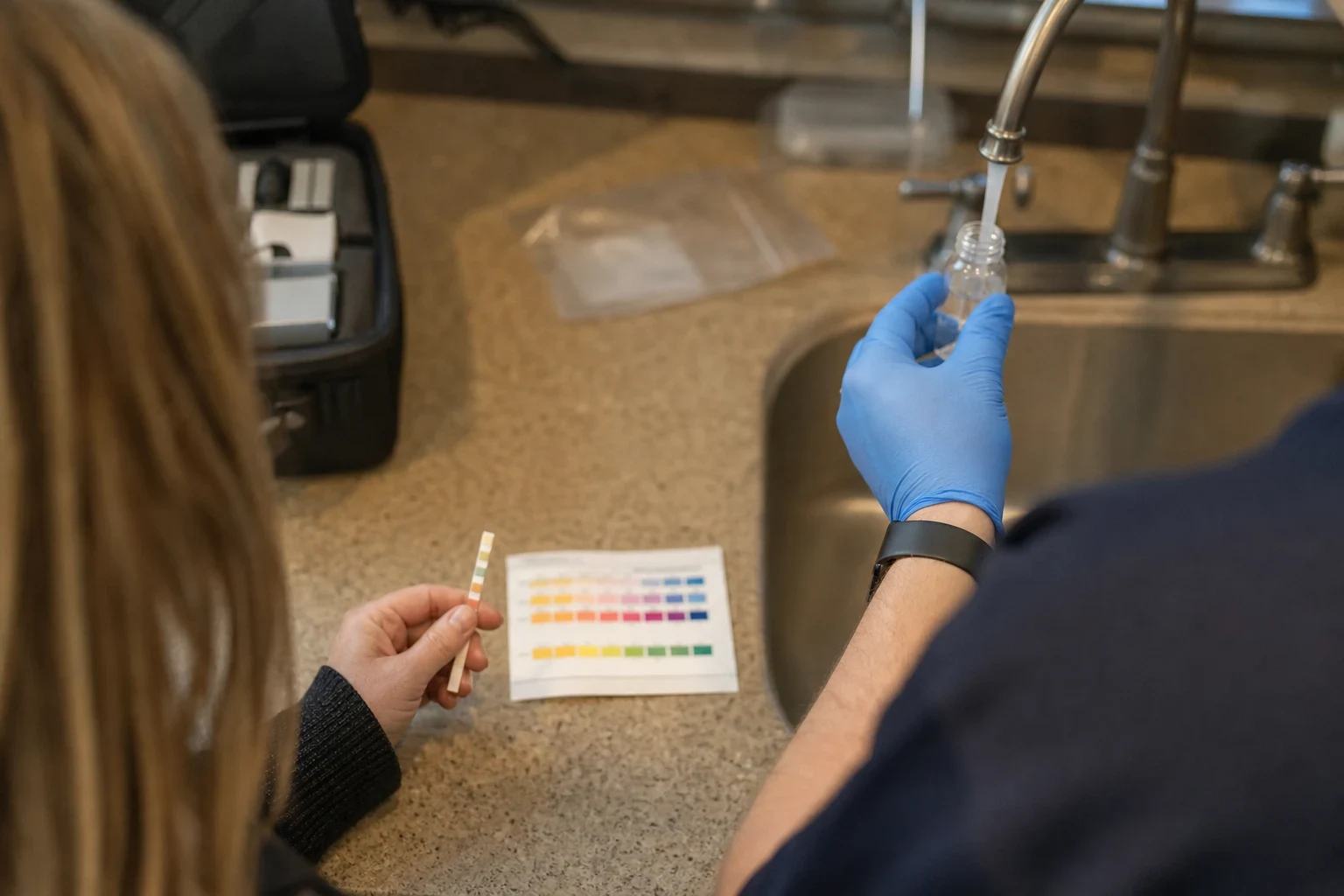
- Before any work begins, we check total dissolved solids at the kitchen tap. We photograph the meter so you can hold it up against the reading we take afterward.
- Every filter stage plus the membrane
- A sediment stage traps grit, a carbon stage removes chlorine that would damage the membrane, and a last polishing filter improves the taste just before the water reaches your glass.
- Its own drinking-water faucet
- We install a separate faucet at your sink, reusing a sprayer or soap dispenser hole if you have one. If the countertop needs drilling, we discuss it with you beforehand.
- Supply valve and drain hookup
- We connect to your cold line with a shutoff valve and attach the drain line using a proper saddle above the trap. Both are photographed for your install record, so a later plumber can see exactly how it was set up.
- Filtered water at the fridge
- If your refrigerator is close enough to the sink, we can run a line to it. The ice maker and door dispenser then deliver the same filtered water as your new faucet.
- Tidy-up and a quick tour
- We wipe the cabinet floor dry and take away all boxes and packaging. Before leaving, we show you the shutoff valve and tell you which filter will need changing first.
When reverse osmosis is worth it in your kitchen
Bottled water is a weekly errand
Hauling cases home every week costs money and takes up pantry space. An RO faucet puts the same kind of water at your own sink.
Your home has older plumbing
Lead usually comes from old pipes, solder or fixtures inside the house, not from the street. An RO membrane strips out a large share of it before the water reaches the glass you fill.
Coffee and tea taste off
Dissolved minerals and leftover disinfectant can flatten flavor. People often notice the difference in their morning cup first.
A test showed something you want lower
If a water test turned up high dissolved solids or a trace contaminant you would rather not drink, RO is a direct answer for drinking and cooking water.
You want extra assurance for family
A new baby, someone with a health condition or just a cautious household can be reason enough. We will explain what RO does and does not remove so you can decide calmly.
What moves the cost of an RO system
Every under-sink RO job is a little different, and we give you a written estimate before any work starts. The price depends mostly on the system you choose and what your sink and cabinet look like. Here is what makes the biggest difference.
Tank or tankless system
Traditional units store water in a small pressurized tank. Tankless models take less cabinet space and fill a glass faster, but they cost more up front.
Countertop and faucet hole
Using an existing hole is simple. Drilling granite, quartz or stone takes more time and the right bits.
Water pressure
If your pressure is on the low side, a booster or permeate pump helps the system work properly and adds to the cost.
Extra lines and add-ons
Running water to a fridge, adding a remineralization stage or reaching a tight cabinet behind a disposal all change the parts and labor.
How install day goes
- 1
A short talk by phone
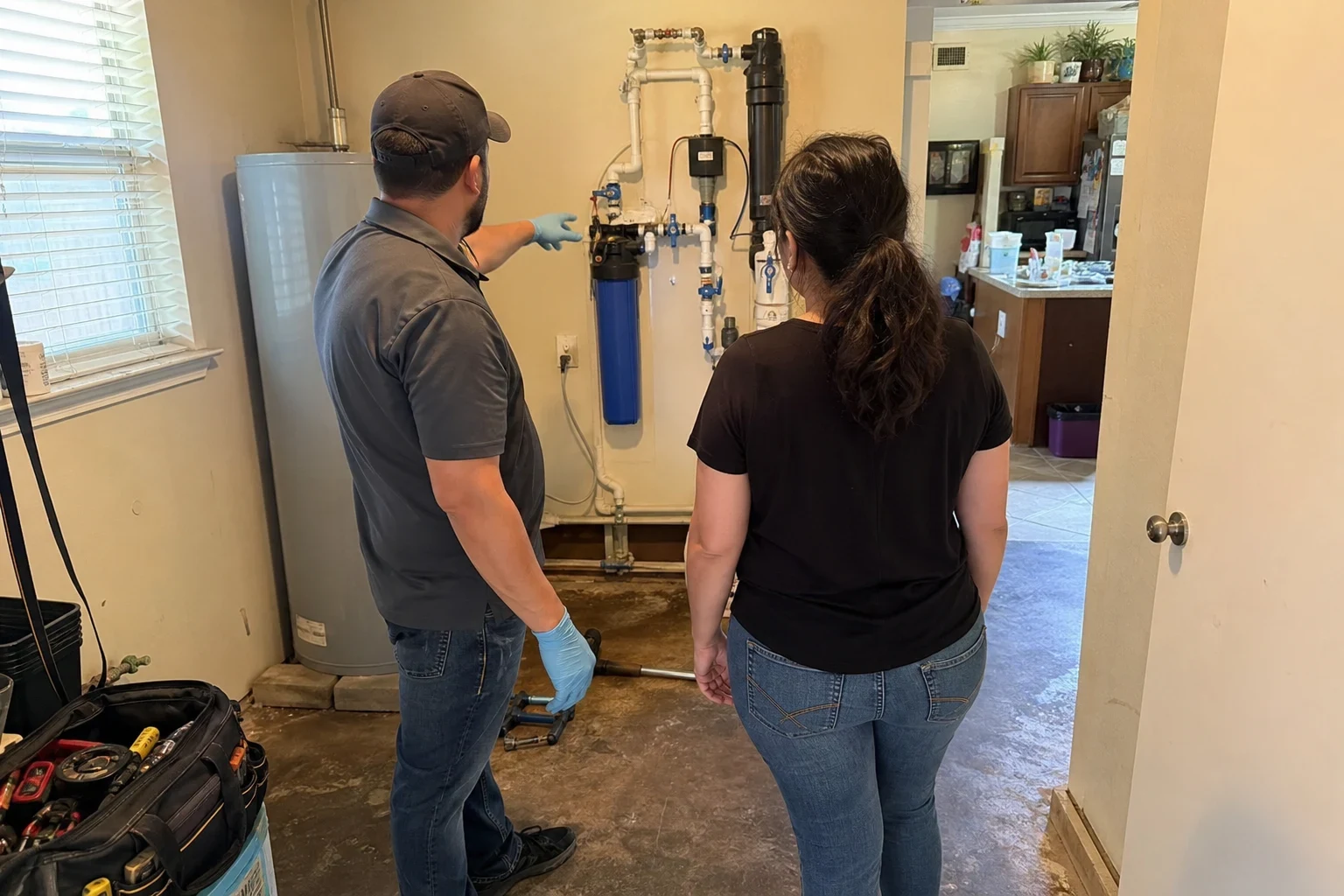
We ask about your sink, your cabinet space, whether you have a disposal and what is bothering you about the water. That tells us which system to bring.
- 2
Look, measure, record
At your home we check water pressure, clear the cabinet with you and note a dissolved solids reading. Low pressure can slow an RO system, so we tell you if a booster pump is worth it.
- 3
Install and leak check
Most installs take a few hours. We fit the valve, drain, faucet, tank and filter housing, then pressurize everything and check each joint for drips.
- 4
Flush and retest
New filters need flushing, so we run the system and drain the first tank. Then we take an after reading at the new faucet and send you the photos from start to finish.
Common questions on under-sink RO
Does an RO system send water down the drain?
A little, yes. To keep itself clean, the membrane flushes part of the water to the drain while it filters. Newer units and permeate pumps reduce that share, and we can go over those choices on the phone.
Is there room for it if I have a disposal?
In most kitchens, yes. The filter assembly typically hangs on the cabinet's side wall with the tank next to it. We check your cabinet ahead of install day and let you know if a compact or tankless model would work better.
When do the filters get replaced?
Expect new prefilters and a new postfilter about once a year. The membrane lasts several times as long, depending on how much water you use and what is in it. Our filter replacement and maintenance service handles the swap, and you get to see the used filters and what they trapped.
Will RO strip out healthy minerals?
It takes out most dissolved minerals, calcium and magnesium among them. Most of the minerals in a typical diet come from food, not water. If you prefer water with some mineral taste, an added cartridge after the membrane can return a bit of calcium and magnesium.
Do I need a water test before installing RO?
You don't have to, but it's a sensible place to start. Knowing what your water really contains keeps you from buying a system for a problem that isn't there. Our water testing page explains how we handle it.
Ready for better water at your kitchen tap
Tell us about your sink and what you would like to change about your water. We will suggest a system that fits, explain the estimate line by line and show you photos of the finished install.